METOSEP R&D Project: Sepiolite as a Key Enabler of Sustainable Biogas Production
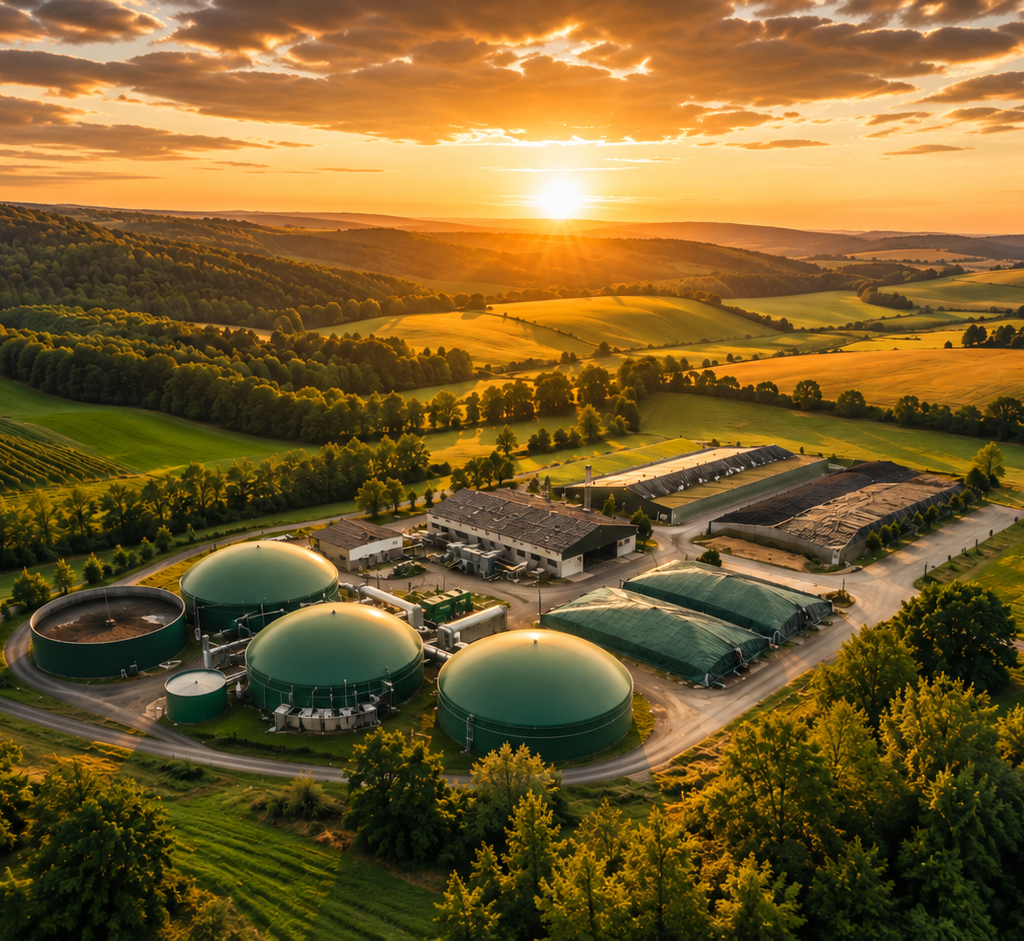
The energy transition demands solutions that reduce emissions without compromising the efficiency of industrial processes. In this context, biogas has emerged as a renewable energy source with significant potential, although unlocking its full value still involves major challenges.
One of them is finding more efficient ways to convert the CO₂ contained in biogas into methane, increasing its energy value while simultaneously reducing carbon emissions.
To address this challenge, METOSEP was launched as a co-creation project developed by Tolsa and the Institute of Chemical Technology (ITQ-UPV-CSIC) under the CSIC COCREA 2023 – Clean and Sustainable Energy programme. Within the project, Tolsa contributes its expertise in the development of advanced mineral-based materials.
A Key Challenge for the Future of Biogas
Biogas produced from organic waste consists mainly of methane (CH₄) and carbon dioxide (CO₂). Although methane is the component with the highest energy value, the presence of CO₂ lowers the calorific value of biogas and typically requires separation processes before high-quality biomethane can be obtained.
These purification processes represent a significant part of the operating costs and energy consumption of biogas plants.
In addition, current commercial catalysts face limitations when it comes to efficiently carrying out the direct methanation of the CO₂ contained in biogas, particularly when the gas stream contains impurities that reduce catalyst performance and accelerate degradation.
A New Sepiolite-Based Approach
The METOSEP project explores an innovative alternative: developing sepiolite-based catalysts capable of directly converting CO₂ into methane using hydrogen produced from renewable sources.
The project pursues a twofold objective: avoid the need for the initial CO₂ separation stage, thereby simplifying the process; while increasing the methane content of biogas through a more efficient and sustainable conversion pathway.
To achieve this, the project is investigating new catalyst formulations that harness the properties of sepiolite as a mineral support, with the aim of improving both catalytic activity and long-term stability.
Greater Efficiency and Longer Catalyst Lifetime
One of the main challenges in methanation is the gradual loss of catalyst activity caused by certain compounds naturally present in biogas.
METOSEP addresses precisely this challenge by developing materials capable of:
- operating directly with real biogas streams;
- providing greater resistance to harmful substances present during the process;
- extending catalyst lifetime;
- improving overall process performance;
- reducing the operating costs associated with biomethane production.
The expected outcome is a more robust technology designed to meet the needs of a rapidly growing biogas industry.
Tolsa’s Role: Minerals Driving Innovation
Tolsa’s involvement in METOSEP reflects a line of work that is part of our innovation strategy: developing mineral-based solutions that deliver value in high-impact industrial applications.
Sepiolite is a mineral with unique structural properties that make it a promising platform for the development of new functional materials. Its high specific surface area, stability and ability to act as a support for active phases open up new opportunities in fields such as catalysis and technologies supporting the energy transition.
Through this co-creation project, Tolsa is helping translate that potential into practical industrial solutions.
Collaborative Innovation to Accelerate the Energy Transition
Addressing today’s major energy challenges requires a combination of scientific knowledge, industrial expertise and innovation.
METOSEP is an example of how collaboration between research institutions and industry can accelerate the development of technologies that make biogas production more efficient, competitive and sustainable.
At Tolsa, we remain committed to projects that demonstrate how industrial minerals can play a decisive role in strategic sectors such as renewable energy, helping build more efficient processes and supporting the decarbonisation of industry.
Related news
Tolsa joins All4Zero to drive industrial innovatio ...
Tolsa joins All4Zero, the industrial technology innovation hub founded by ArcelorMittal, Holcim Iberia and Repsol, with the aim of contribuiting its expertise in minerals and special clays to the development of innovative industrial solutions. This collaboration opens up opportunities to explore new applications for these natural resources and develop advanced materials capable of responding to some of the major challenges shared by the industry: the energy transition, decarbonisation and the circular economy.