Safety is not just one department’s responsibility. It’s everyone’s responsibility.
Safety goes far beyond procedures, rules and performance indicators. It involves behaviours, everyday decisions and, above all, a culture shared across the entire organisation. We spoke with Raquel Raimundez Martínez about the challenge of continuing to strengthen Tolsa’s safety culture, how to measure progress and the role each of us plays in making it happen.
The biggest challenge: changing the culture
When it comes to making further progress in safety, one of the biggest challenges is cultural change. What does it really mean to change the safety culture of a company like Tolsa?
The safety culture we aspire to is one in which we make safe decisions and act safely even when no one is watching. This means not only implementing technical measures, but also providing training and raising awareness at every level of the organisation.
A true safety culture emerges when safe behaviours become habits. When someone corrects an unsafe situation, reports a risk or stops an unsafe task without being asked, we know we are moving in the right direction.
Where do you encounter the greatest resistance to change, and how can it be overcome?
The greatest resistance often comes from established ways of working. Over time, familiarity can reduce our perception of risk. We begin to normalise potentially dangerous situations and underestimate the possible consequences for employees.
The best way to overcome these barriers is to explain the reasons behind decisions and why it is important to act responsibly towards others and follow safety measures. It is also essential to involve people, encourage them to share their ideas and work together to find the best solutions. When people participate and understand the purpose behind a change, it becomes much easier to achieve.
Safety is not just one department’s responsibility
We sometimes tend to think that safety belongs to the Health and Safety department. How can we help everyone understand that safety is a shared responsibility?
The Health and Safety team provides support and guidance, but it is the decisions each of us makes every day that truly make the difference.
Safety depends on people. It is reflected in how we carry out tasks on site, following procedures, how we treat our colleagues with respect and how we decide which actions to prioritise. These everyday behaviours are what really help prevent accidents and incidents.
When we understand that our actions affect not only ourselves but also our colleagues, safety becomes a shared responsibility.
What role do Health and Safety teams, supervisors and team leaders play in this change? And how important is it to listen to those closest to day-to-day operations?
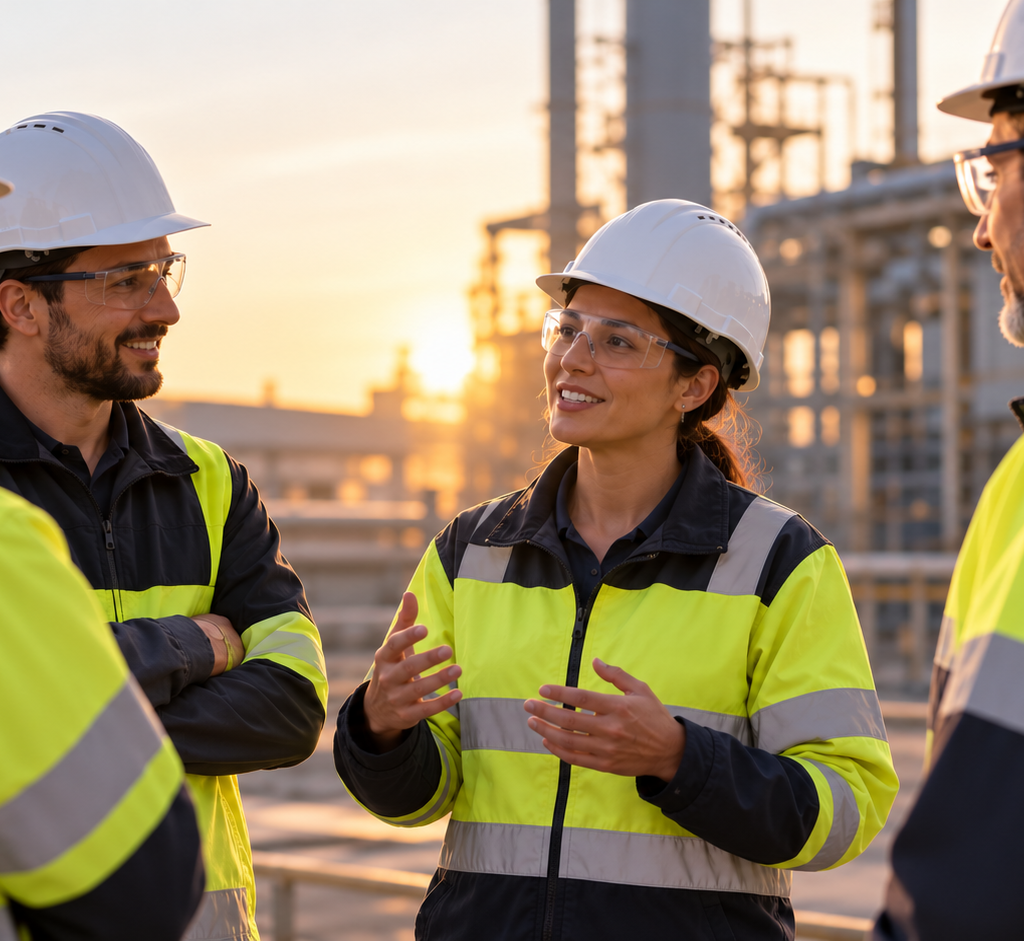
Health and Safety teams play a fundamental role as facilitators and technical experts, but everyday leadership largely rests with supervisors and team leaders. They are the ones who can truly integrate safety into planning, decision-making and daily conversations.
Supervisors and team leaders are role models within the company. Their behaviour sets an example for others, and they have the authority to influence how work is carried out. They are therefore essential to ensuring safe working practices.
Equally important is listening to those who perform the tasks every day. People working closest to operations understand the actual risks, challenges and opportunities for improvement better than anyone. A strong safety culture is built through open dialogue, where employees’ suggestions are valued and translated into concrete actions.
How do we know if the culture is changing?
Cultural change can seem difficult to measure. How are you assessing whether we are genuinely progressing towards a stronger safety culture?
Although culture has an intangible element, there are many indicators that allow us to assess how it is evolving. We look at aspects such as safety signage across our facilities, training sessions delivered, participation in safety activities, the quality and number of safety observations, team involvement in implementing safety measures and the ability to identify risks before incidents occur.
What signs tell you that an organisation is becoming more mature in its approach to safety, beyond a reduction in the number of accidents?
An organisation with a mature safety culture is one where people talk openly and naturally about safety, where risks are reported without fear and where solutions are sought before problems arise. One particularly positive sign is when operational departments proactively seek advice from the Health and Safety team.
Another encouraging sign is when employees feel confident enough to question an unsafe situation, even if it is part of an established way of working. When prevention becomes proactive rather than reactive, we are seeing genuine cultural change.
The indicators that tell the full story
Which indicators help us understand whether we are improving safety?
Accidents remain an important indicator, but they do not tell the whole story on their own. We are increasingly focusing on leading indicators, such as inspections carried out, corrective actions completed, safety observations, improvement suggestions and employee participation in preventive initiatives.
These indicators help us understand what we are doing today to prevent tomorrow’s accidents.
For example, how important are near misses? Can an increase in reports of potentially dangerous situations actually be a positive sign?
Near misses are one of the most valuable sources of learning because they allow us to identify weaknesses before someone gets hurt.
That is why an increase in reporting should not always be seen as something negative. Quite the opposite: in many cases, it shows that people are more alert, more aware of risks and more comfortable sharing their concerns.
What should concern us is not the number of reports, but the possibility that people might notice dangerous situations and choose not to report them.
Employee involvement
What role do employees play in improving safety?
They play an absolutely essential role. No procedure or tool can replace the observation, experience and commitment of the people who carry out the work every day.
The most valuable improvements often come from those who know the processes in detail and deal with risks on a daily basis. That is why active employee participation is one of the fundamental pillars of any safety management system.
How can we make people feel comfortable speaking up when they notice something is wrong, even when the response might be “we’ve always done it this way”?
The key is trust. People need to know that reporting a risk or raising a concern is a positive contribution, that they will be listened to with respect and that their initiative will be valued.
It is also important that they see results. When someone reports a hazardous situation and the organisation takes action to resolve it, it reinforces the message that speaking up makes a difference. A safety culture grows stronger when people feel their voices matter.
Bringing safety into everyday work
If everyone at Tolsa wanted to start contributing to a stronger safety culture tomorrow, what three things could they do in their daily work?
The first is to take a few seconds before starting a task to identify potential risks and check that they have the right resources and equipment to carry it out safely.
The second is to report any unsafe condition, deviation or situation that could lead to an incident, however minor it may seem.
And the third is to look after both their own safety and that of their colleagues, stepping in respectfully whenever they observe risky behaviour.
What is the one message you would like Tolsa employees to take away when we talk about safety?
I would like everyone to remember that safety is not a goal we achieve once and then move on from. It is a daily commitment that we build together and that benefits us all.
Every decision matters. Every observation, suggestion and conversation about safety helps protect people. When we work together and look out for one another, we do more than prevent accidents: we build a stronger, more responsible and more sustainable organization.
Raquel Raimundez Martínez
Global head of Health & Safety